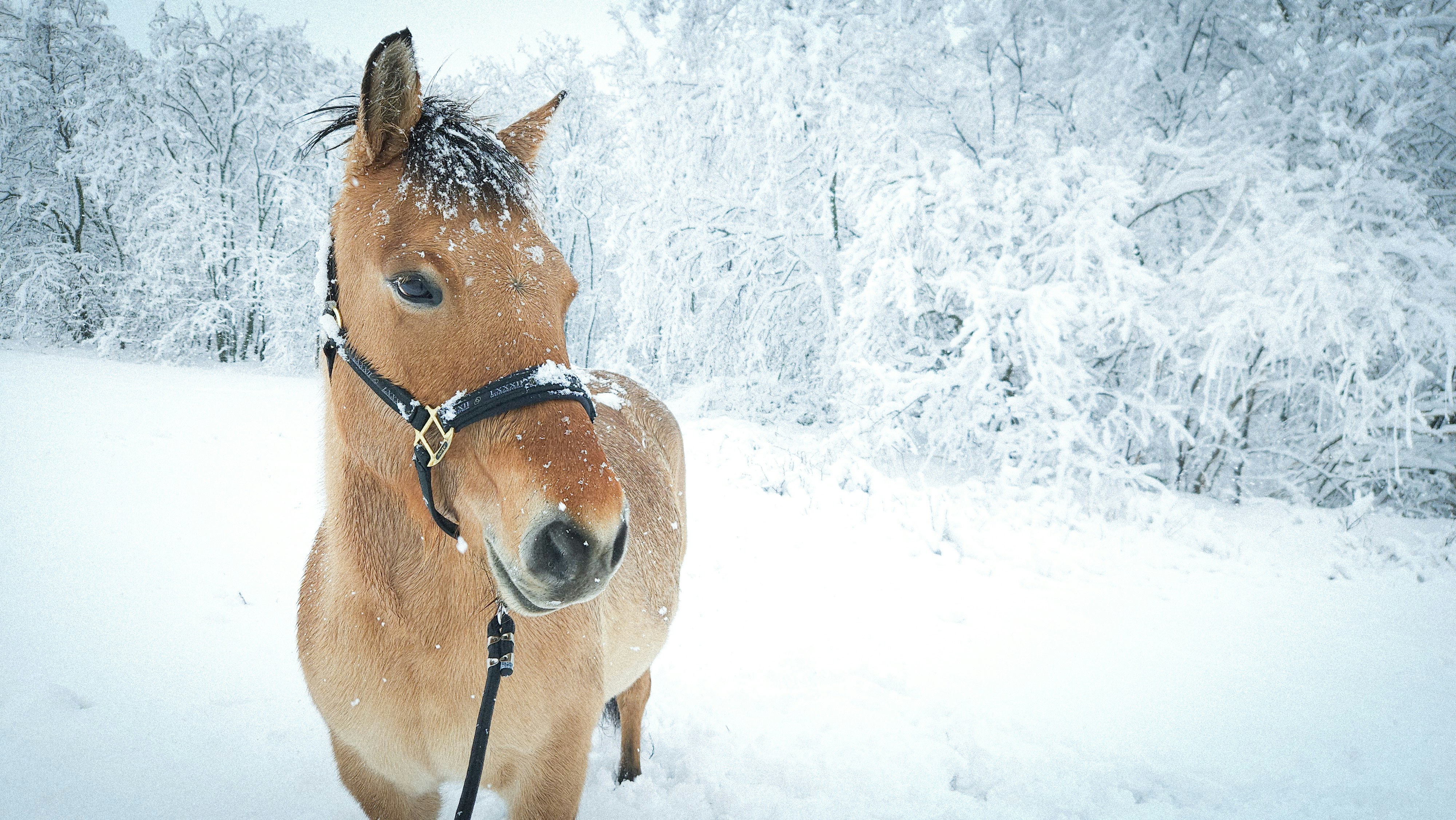
The first frost is here, and you’re wondering whether your horse needs to be managed differently in winter? The answer is yes. Cold, slush, and less daylight place new demands on housing, feeding, and care.
Winter feeding: More energy against the cold
At sub-zero temperatures, your horse needs 10-20% more energy than in summer. The body is constantly generating heat to fight off the cold. That takes energy.
Hay is the most important source of warmth. Per 100 kilos of body weight, you should feed at least 1.5-2 kilos of hay per day. More if kept in an open stable or on turnout. The digestive process in the hindgut generates body heat from within.
Increase concentrates gradually. A 500-kilo warmblood can get an extra 500-1000 grams of oats or muesli in winter. Split the amount into several meals.
Offer warm water (not hot, just lukewarm)
Provide a salt lick
For thin horses: add oil to the feed (after consulting your vet)
Weigh your horse weekly. Ribs should be palpable, but not visible.
The right setup for your horse in winter
Horses are hardier than many people think. Down to minus 15 degrees, healthy horses in winter coat usually cope well. More important than warmth are dry lying areas and protection from wind.
In an open stable you should check the bedding every day. Wet shavings or straw will draw heat from the body. A dry shelter is usually enough. Three walls are sufficient; the fourth side can remain open.
In box housing, you should ventilate even in winter. Stuffy air harms the respiratory tract more than fresh cold air. Leave the window slightly open, but avoid drafts.
Water must never freeze. Heated drinkers or insulated tubs prevent ice formation. A thirsty horse drinks too little and risks colic.
Blanket or not: The blanket decision
Winter coat is a wonder of nature. Each hair stands up in the cold and creates insulating air pockets. A blanket flattens those pockets.
You only need a blanket if:
Clipped horses (from 5 degrees)
Very old or sick animals
Horses without shelter in persistent rain
Horses newly stabled from warm barns
Rule of thumb: Can you feel warm, dry skin beneath the winter coat? Then your horse is not cold. Milo from ManeMap takes local temperatures and your horse’s age into account to give you the right blanket recommendation every day.
Change wet blankets immediately. A damp blanket cools more than no blanket at all.
Adjust movement and training in winter
Even in sub-zero temperatures, your horse needs exercise. Stiff joints and weak muscles come from stall rest, not from the cold.
Extend the warm-up to 15-20 minutes. Muscles that have gone cold need time. Always start at the walk, even if it gets boring.
In icy conditions, skip cantering or tight turns. Slipping hooves can injure tendons and ligaments. Road salt attacks the hoof sole, so rinse the hooves with clean water after the ride.
Indoor alternatives for icy days:
Groundwork in the stable
Lunging in the arena
Hand walks
Massage and stretching
Care and health: what to pay special attention to
Muddy paddocks and damp stalls encourage mud fever and thrush. Check the hooves daily. Black, foul-smelling areas in the frog are warning signs.
You groom the winter coat differently than the summer coat. Too much grooming removes the protective skin oils. A soft brush is usually enough. Groom more thoroughly only when there is dirt and sweat.
Dry sweaty horses off completely. Damp coat under a cooler rug can chill the horse. Better to lead them for longer until the horse is dry.
These signs mean: call the vet immediately:
Shivering at normal temperatures
Stiff gait despite warming up
Coughing or nasal discharge
Loss of appetite for more than 24 hours
Warm, painful swelling on the legs
You should only add extra minerals or vitamins after consulting your vet. A blood test will show what your horse really needs.
Stop Guessing! Test ManeMap Pro free for 30 days. Milo analyzes weather, training, and health so you know every day what your horse needs — even in the tough winter months.