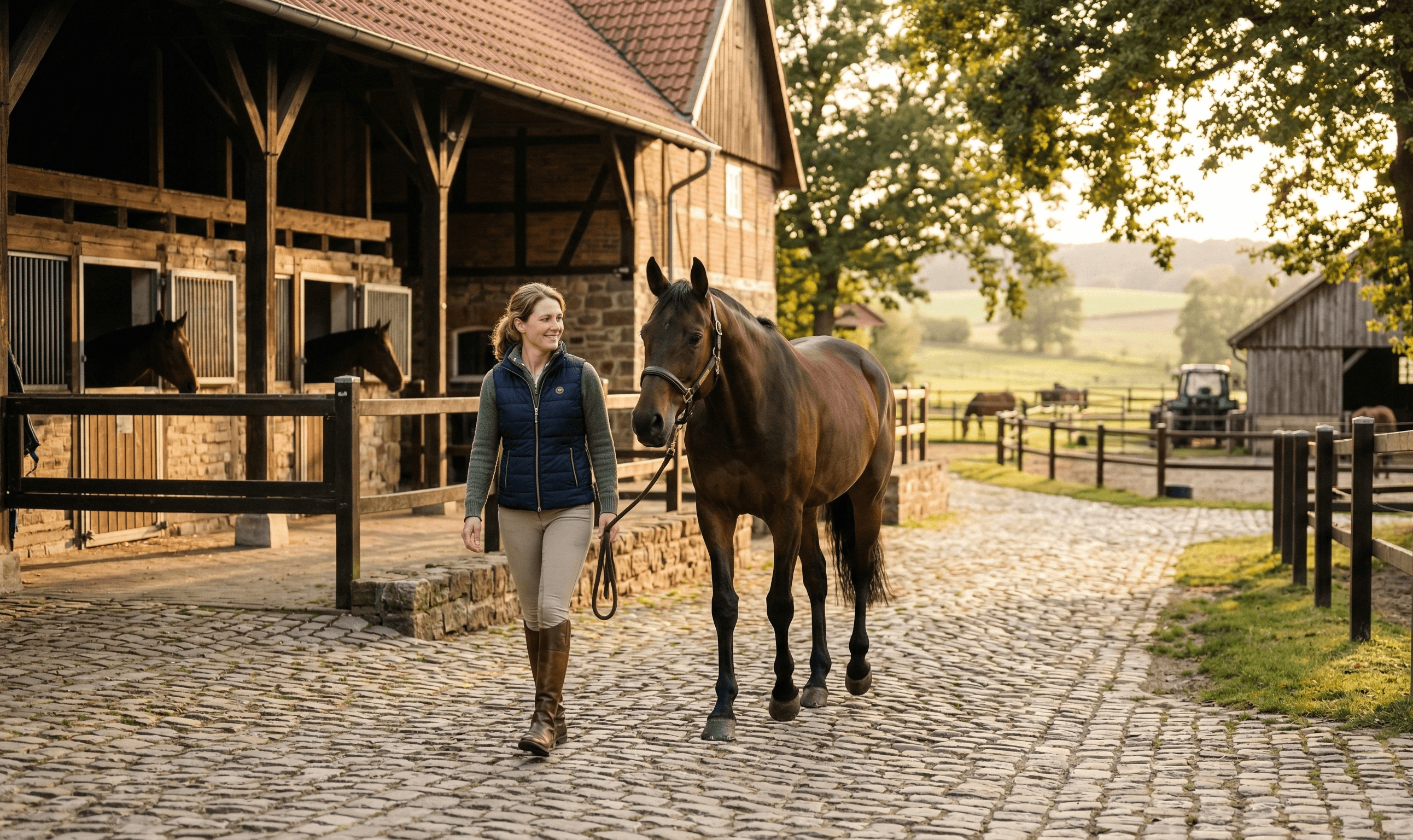
You’ve finally found your dream horse, and it’s now in your stable. Congratulations! A thrilling time begins now, as you and your new horse get to know each other. A well-thought-out checklist for the first 30 days helps you avoid overlooking anything important and gives your partnership the best possible start.
First week: Settling in and observing
The first few days are often stressful for your horse. Moving to a new stable means new smells, unfamiliar horses, and changed routines. Give your four-legged partner time to settle in.
Arrange a veterinary health check within the first 3 days
Collect the vaccination passport and all documents from the previous owner
Contact the farrier and plan the next appointment
Keep the previous owner’s feeding plan at first, then switch gradually
Daily basic care: grooming, picking out hooves, checking overall condition
Only short walks or relaxed leading exercises — no intense training
Watch your horse closely. Is it eating normally? Drinking enough? How does it behave around other horses? This information is worth its weight in gold for the next steps.
Weeks 2-3: Building trust and establishing a routine
By now, you know your horse a little better. Time to develop a shared routine and strengthen trust.
Groundwork is now the focus: Leading exercises, simple cues, and respect training help you build communication. Your horse learns your voice, your movements, and your style.
Introduce fixed grooming and feeding times
Start with first light groundwork sessions (15-20 minutes)
Have the tack adjusted: check halter, bridle, and saddle
On nice days, go out to the pasture or turnout area together
Connect with other horse owners at the stable
Milo from ManeMap pays especially close attention during this phase: he combines weather data with your horse’s behavior and gives you concrete recommendations in the Morning Briefing. On rainy days, he suggests focused stable work; in sunny weather, he motivates you to do longer sessions outdoors.
Weeks 3-4: Training and integration
Your horse has settled in? Perfect! Now you can begin with proper training. Still, take it slowly and step by step.
If your horse needs supplements — such as a mineral feed or vitamins — be sure to discuss this with your veterinarian (after consulting your vet). Every horse has different needs depending on age, breed, and management.
First riding sessions: short (20-30 minutes), in walk and trot
Hacks only with experienced riders
Regular weight checks and fitness assessment
Get feedback from the vet on how the adjustment period is going
Create a training plan for the coming months
Pay especially close attention to your horse’s signals. Is it tired or stressed? Then take a break. Is it showing interest and motivation? Then you can gradually increase the work.
After 30 days: Health check and planning
The first month is done! Time for an honest review. How is the partnership going? Where are the rough spots?
Have your vet perform a comprehensive health check. Blood work, dental exam, and vaccination status — now you’ll know exactly where your horse stands. It’s also the perfect time to talk about deworming and the next steps for the health plan.
Detailed veterinary appointment with blood work
Document training: what’s going well, where are the sticking points?
Adjust the feeding plan if needed
Define long-term goals
Review and adjust insurance coverage
Warning signs: When to call the vet immediately
Some problems can’t wait. Call your vet right away if your new horse:
Doesn’t eat or drink for more than 24 hours
Shows signs of colic (restlessness, sweating, looking at its belly)
Shows lameness or reluctance to move
Has a high fever (above 38.5°C)
Has serious injuries or wounds
Shows labored breathing or unusual breathing sounds
With a new horse, it’s better to be cautious than to regret it later. You don’t yet know its normal behavior well enough to interpret small changes correctly.
Stop guessing! Try ManeMap Pro free for 30 days. Milo analyzes weather, training, and health data so you know every day what your new horse needs. That way, the exciting first month becomes the foundation for a long, happy partnership.