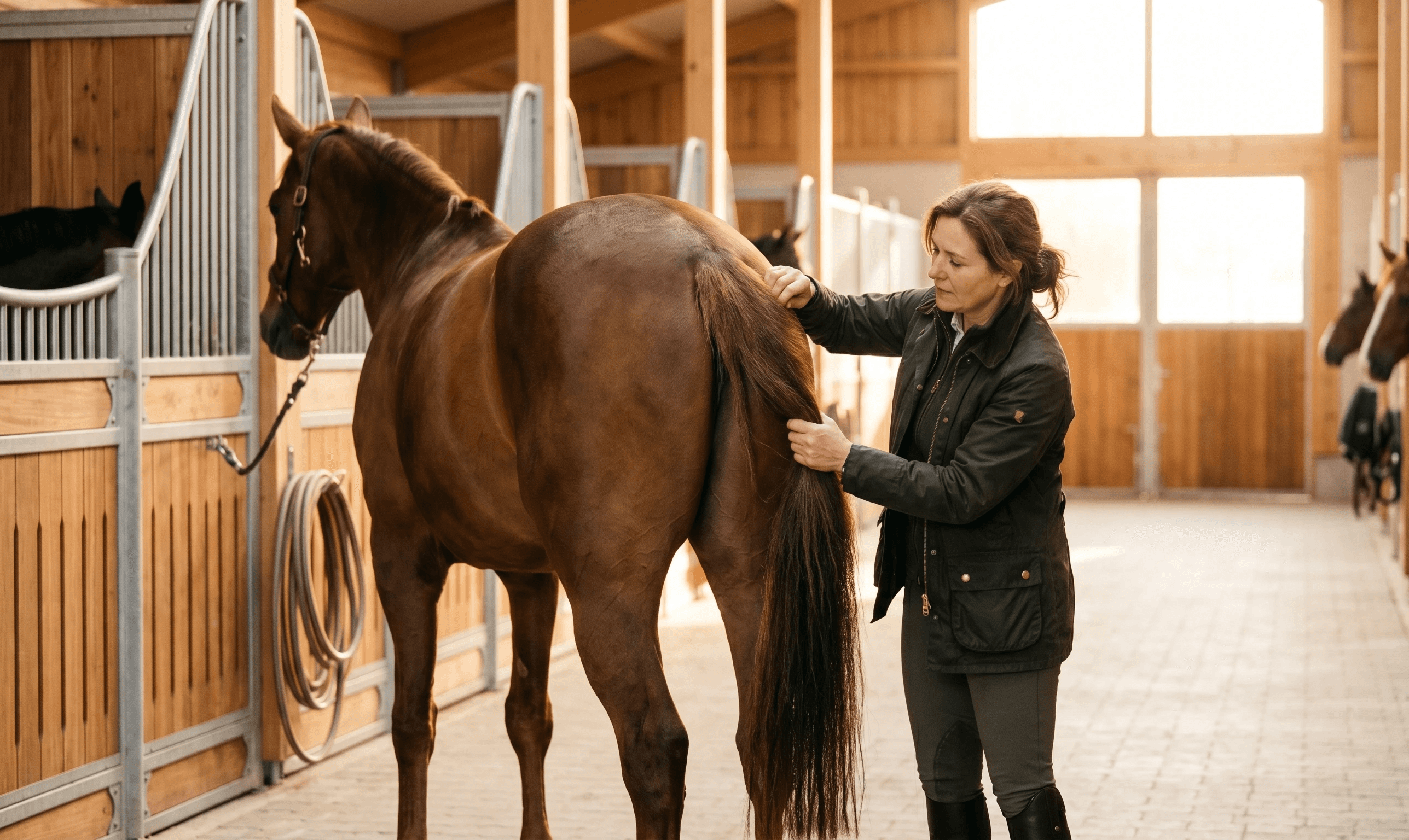
Has your horse suddenly got brown watery discharge around the tail, and you’re wondering what’s going on? Manure water in horses can have a range of causes - from harmless to something that needs treatment.
What exactly is manure water?
Manure water is a brownish liquid that comes out independently of normal manure output. Many horse owners mistake it for diarrhea, but it isn’t. With manure water, the normal horse droppings stay formed, but this liquid runs off as well.
The problem often comes and goes in flare-ups. One week everything is fine, then it starts again daily. Especially unpleasant: the liquid often runs off uncontrollably and soaks the legs and tail.
The 7 most common causes of manure water
1. Wrong feed or a feed change
Too much concentrate, poor-quality hay, or changing feed too quickly can overload the gut. In particular, high-sugar feeds such as apples, large amounts of carrots, or sweet treats can trigger manure water.
Moldy hay is also a common trigger. Always check your hay for a musty smell and gray patches.
2. Stress and excitement
Competitions, stable moves, new herd mates - anything that stresses your horse can affect digestion. The gut often reacts more sensitively than we realize.
3. Dental problems
Sharp points, loose teeth, or pain while chewing can keep horses from properly breaking down their feed. Poorly chewed feed ferments in the gut and can cause manure water.
4. Worm infestation
A heavy worm burden, especially with small strongyles, irritates the intestinal lining. The result: inflammation and manure water.
5. Medications
Antibiotics destroy not only harmful bacteria but also beneficial gut bacteria. After treatment, the gut flora is often off balance for weeks.
6. Risk of sand colic
Horses that graze on sandy ground or eat hay off the ground often ingest sand. It builds up in the gut and can trigger manure water as well as colic.
7. Liver problems
The liver produces bile acids, which are important for fat digestion. If it isn’t working properly, manure water can develop.
When should you call the vet?
Manure water is not always harmless. Call your vet if:
The manure water lasts longer than a week
Your horse also seems dull or loses its appetite
Fever develops
The mucous membranes look pale or yellow
Your horse shows signs of colic
Weight loss occurs
First aid for manure water
Before the vet arrives, there are a few things you can do:
Check the feed: Reduce concentrate feed and sweet treats right away. Feed only the best hay and make sure any feed changes happen slowly over at least 14 days.
Keep things calm: Avoid stress. Skip competitions and make sure the environment stays quiet.
The ManeMap app helps you spot patterns. Milo combines your feeding notes with weather data and stress factors to work out what triggers manure water in your horse.
Hygiene: Keep the soiled areas clean and dry so skin irritation doesn’t develop.
Prevention is the best protection
Regular dental checks, thoughtful feeding, and stress management help prevent manure water. A fecal sample every six months shows whether deworming is needed.
Pay attention to high-quality feed: good hay smells fresh and is dust-free. Concentrates should not exceed your horse’s actual needs - many leisure horses don’t need any at all.
Stop guessing! Try ManeMap Pro free for 30 days. Milo analyzes feed, stress, and environmental factors so you can spot early on what is causing problems for your horse.