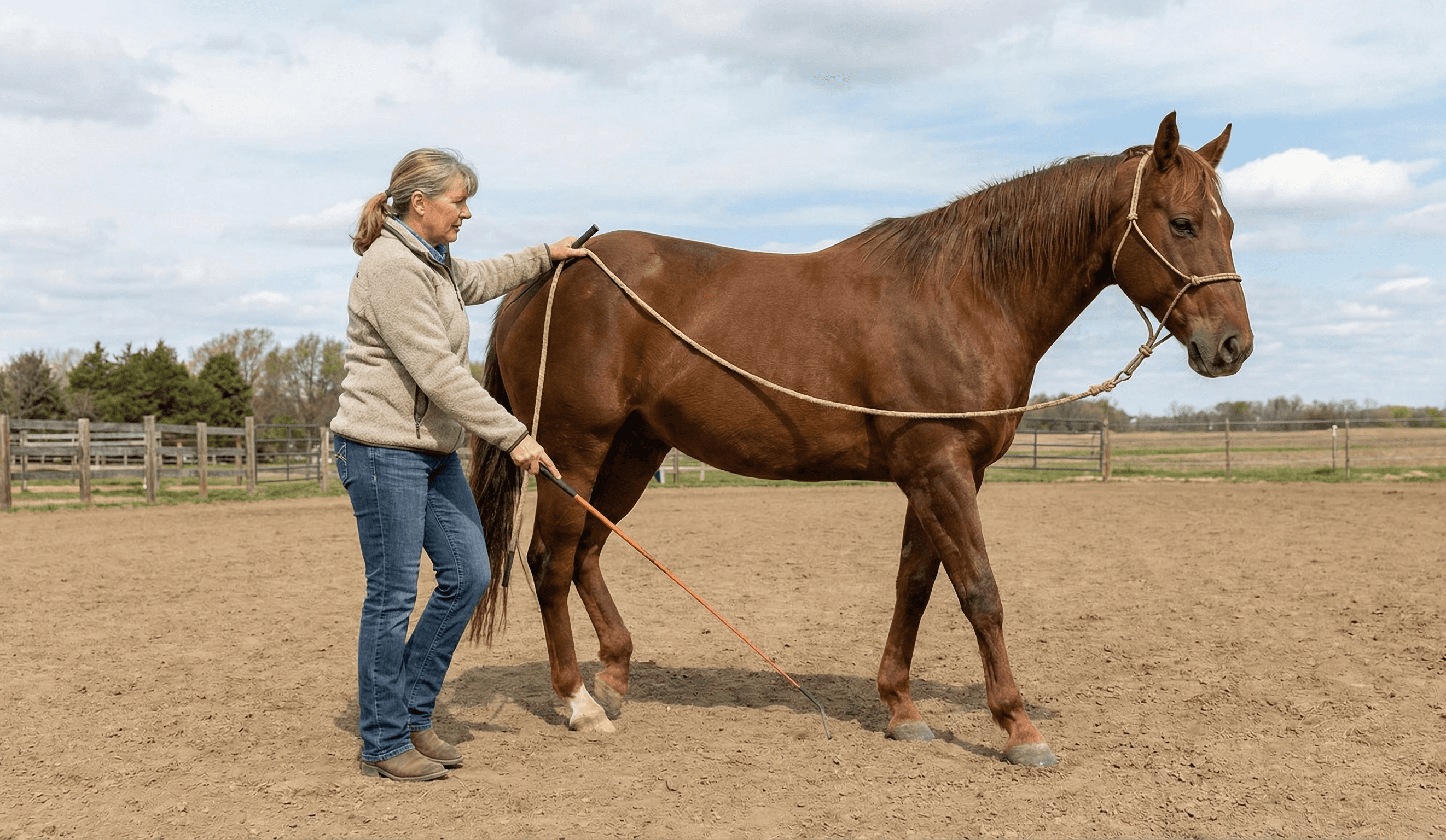
You’re standing in front of your horse, wondering how the two of you can build a relationship based on trust? Groundwork for horse beginners is the perfect way to get to know your horse and create a solid foundation. It teaches you how to lead and train your horse from the ground — with no riding required.
What is groundwork, and why is it so important?
In groundwork, you stand beside or in front of your horse and work with it through body language and clear cues. You teach it to respond to your aids without being in the saddle. That makes groundwork especially valuable for beginners.
Horses are herd animals with a clear hierarchy. Through groundwork, you show your horse that you are taking the lead — but in a fair and respectful way. Your horse learns to trust you and listen to you. That is worth gold later under saddle.
The benefits are obvious:
You build trust with your horse
Your horse learns basic commands
You better understand your horse’s body language
You can react faster when problems arise
The right equipment to get started
You don’t need much equipment for your first steps in groundwork. A well-fitting halter and a lead rope are completely enough. The lead rope should be about 2–3 meters long — no longer, or you’ll lose control.
Make sure the halter fits properly. It should not pinch, but it also should not be too loose. The noseband should sit about two finger widths below the cheekbone.
Wear sturdy shoes with non-slip soles. Sneakers are off-limits — if your horse steps on your foot, they won’t protect you. Gloves can be helpful at the beginning so the rope doesn’t slip through your hands.
Basic exercises for groundwork beginners
Start with simple exercises. First, teach your horse to lead politely. Walk slightly to the side of your horse’s head — never directly in front of it. Hold the lead rope loosely in the hand closest to the horse’s head.
Proper leading is the foundation. Your horse should neither push ahead nor lag behind. If it speeds up, stop and wait until it is standing beside you. Reward it with a calm “good” or a gentle touch on the neck.
Practice stopping on command. Say “whoa” or “halt” and stop walking. Give the halter a light tug if your horse doesn’t respond right away. As soon as it stops, praise it generously.
Backing up comes next. Stand in front of your horse and press the flat of your hand against its chest. Say “back.” If it even takes one step back, stop immediately and praise it.
Avoid common beginner mistakes
Many beginners make the same mistake: they get impatient. Your horse needs time to understand what you want. It’s better to repeat exercises more often and keep them shorter.
Pay attention to your body language. Horses immediately sense when you are nervous or unsure. Breathe calmly and move slowly and deliberately. Hectic movements make your horse uneasy.
Another mistake: wanting too much at once. Focus on a maximum of two exercises per training session. Five minutes of focused work is better than half an hour of chaos.
Never let your guard down. Even if your horse is well-behaved, it is still a 500-kilo animal with its own reactions. Keep it in sight at all times and be prepared for unexpected movements.
How to recognize progress in your horse
Progress in groundwork often shows up in small details. Your horse turns its head toward you more often and watches you attentively. That shows it accepts you as a trusted figure.
Milo from ManeMap can help you document this development. The app takes the weather and your horse’s daily condition into account and suggests suitable training times. On rainy days, for example, Milo recommends shorter groundwork sessions in the stable.
Pay attention to how quickly your horse responds to your cues. At first, it may take three seconds before it stops. After a few weeks of training, it will respond to your “whoa” immediately.
Your horse’s posture will change too. A relaxed horse lowers its head and chews softly. The ears are alert and forward, but not rigid.
Safety comes first
As much as we enjoy groundwork: your safety comes first. Never lead a horse without a halter. Even the most well-mannered horse can spook and react unpredictably.
Never wrap the lead rope around your hand or body. If your horse suddenly bolts, you could be seriously injured. Always hold the rope so you can let go immediately.
Never work alone with a horse you don’t know. Especially at the beginning, there should always be an experienced person nearby who can help you.
If your horse shows signs of stress — raised head, flared nostrils, restless pacing back and forth — end the session. Never force an exercise if your horse is clearly overwhelmed.
Your next step
ManeMap automatically reminds you of the most important care appointments — personalized for your horse. Available in the Google Play Store from May 1, 2026.
👉 Join the waitlist now