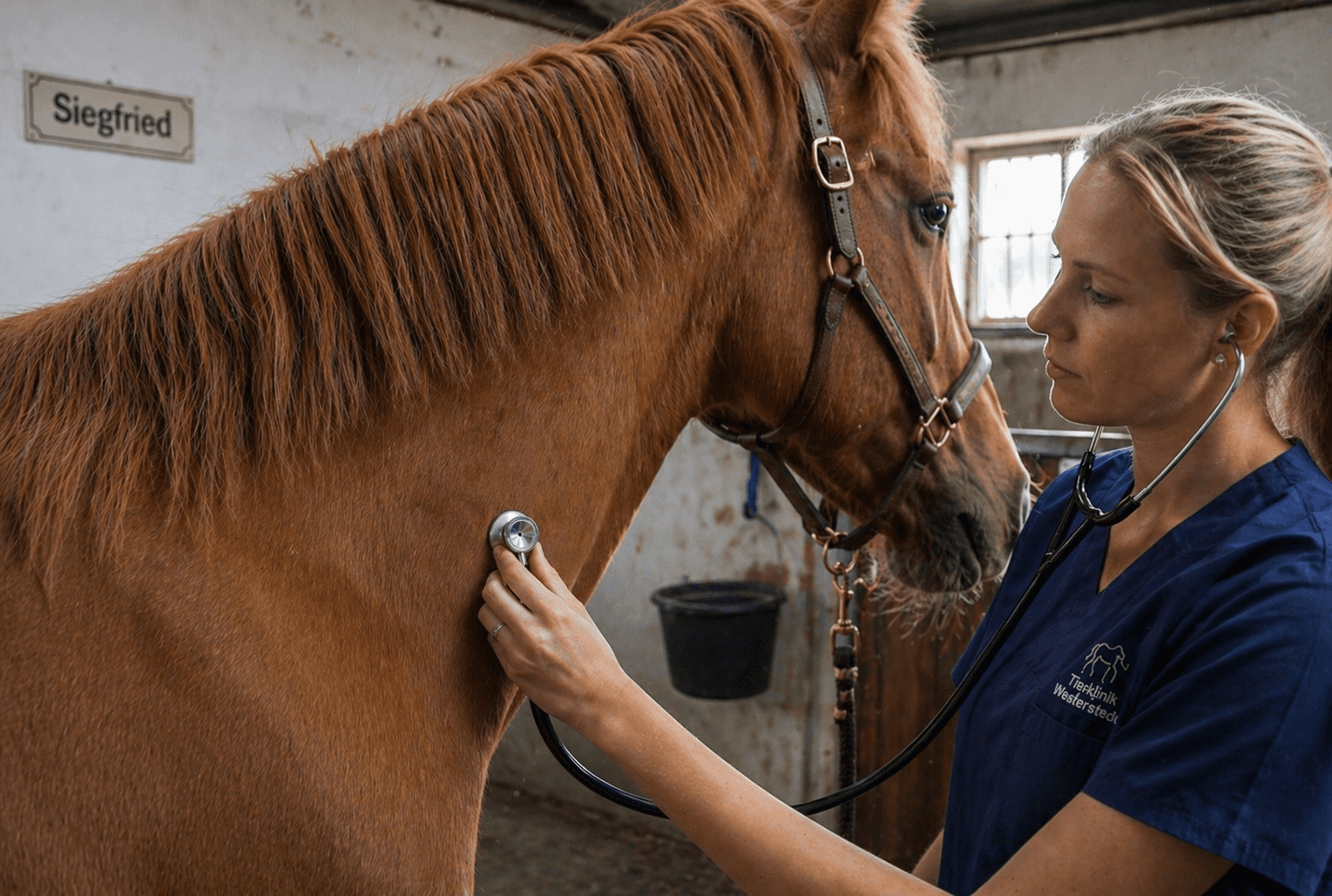
You’ve found your dream horse and want to buy it? Then you should think about a pre-purchase exam. A PPE is like a thorough vet check before buying a horse and can save you a lot of hassle later.
What happens during the pre-purchase exam
The PPE is done by a veterinarian you choose yourself. The seller does not get to pick the vet. The horse is checked from head to hoof: heart, lungs, eyes, teeth, legs, and the entire musculoskeletal system.
The vet also tests the horse’s movement. The horse is walked and trotted on hard and soft ground. Sometimes flexion tests are included - a leg is held in a flexed position, and then they check whether the horse moves differently afterward.
In some PPEs, the vet takes X-rays of the legs. That costs extra, but it reveals problems in the bones and joints.
Big and small PPE: the differences
In a small PPE, the vet only gives the horse an external examination. Listening to the heart, checking the eyes, testing movement. That is often enough for a leisure horse.
The big PPE is more thorough. X-rays are added here, and sometimes bloodwork too. For sport horses or expensive horses, it usually makes sense.
Milo from ManeMap can help you interpret the PPE results correctly, by the way. He combines the veterinary findings with the planned activities for your horse and shows you what to pay attention to.
What the PPE costs
A small PPE costs between 150 and 300 euros. With a big PPE including X-rays, you can quickly be looking at 500 to 800 euros or more.
That sounds like a lot of money. But imagine buying a horse for 8,000 euros and later finding out it goes lame. Then the 300 euros for the PPE were money well spent.
You always cover the cost as the buyer, by the way. Even if the horse fails.
When you can skip a PPE
For a 25-year-old retiree pony for 500 euros, a PPE usually isn’t worth it. A few minor aches and quirks are normal here.
Also, if you’ve known the horse for a long time and ridden it often, you usually already know how it moves. A PPE then doesn’t reveal much new.
For young, healthy horses intended for normal leisure riding, a small PPE is often enough.
The most common problems in a PPE
Many horses fail because they have chip fractures in the joints. These are tiny bone fragments that show up on the X-ray. Some horses live and work with them without problems, others go lame.
Bone spavin and osteoarthritis in the joints are also common findings. Almost normal in older horses, a problem in young ones.
The vet finds heart murmurs in many horses. Most are harmless, but some point to genuine heart problems.
How to prepare for the PPE
Schedule the appointment early. Good veterinarians are often booked out for weeks.
The horse should be clean and dry. Mud on the legs makes the exam harder.
Make sure you have time. A thorough PPE takes 1-2 hours.
Ask for everything to be explained. The vet should tell you what they’re doing and what they find.
After the PPE: what happens next
You’ll get a written report with all findings. If it says "no significant findings", everything is in order.
If anything stands out, the vet will explain what it means. Some issues are harmless; others make the horse unsuitable.
Then you decide whether you still want to buy the horse. Maybe you can also negotiate the price.
After the purchase, ManeMap can help you keep an eye on your horse’s health. The system reminds you of important checkup appointments and adjusts its recommendations based on the PPE findings.
When to call the vet
If your horse is lame after the purchase, even though the PPE was unremarkable, see a vet right away. Sometimes problems only develop later.
You shouldn’t wait with other health changes either. The earlier problems are detected, the better they can be treated.
Your next step
ManeMap automatically reminds you of the most important care appointments — personalized for your horse. Available in the Google Play Store from May 1, 2026.