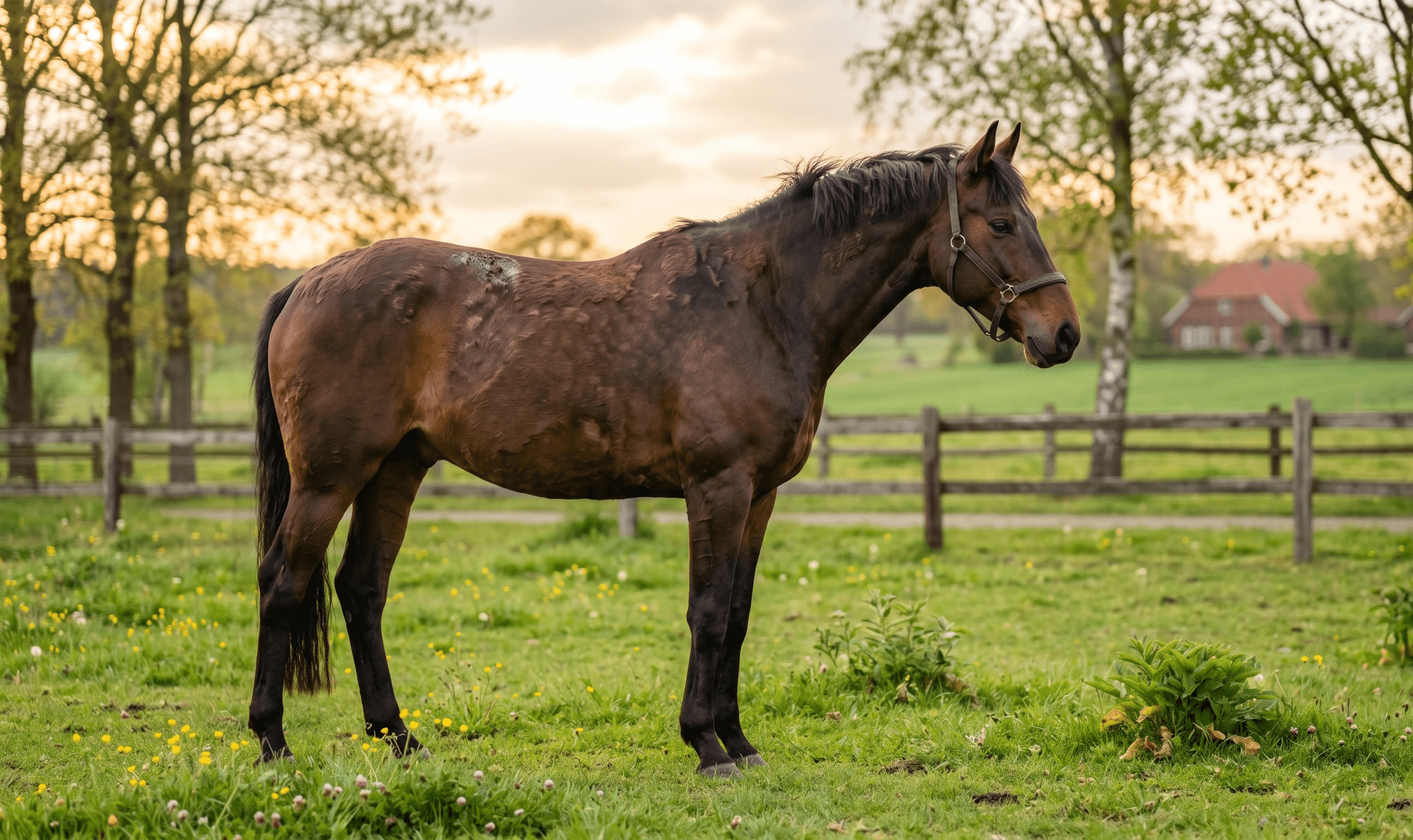
Helping your horse through shedding: What you need to know now
Coat change in horses: 5 practical measures for spring and fall. Grooming, minerals, training, stable climate — what really helps.
Shedding the coat is harmless in itself. Even so, it’s one of those moments when many horse owners wonder: Am I doing the right thing?
The coat comes out in clumps. Your horse seems more sluggish than usual. And you don’t know whether that’s normal, whether you should adjust the feed, or whether training is still okay today.
It’s not because you don’t know enough. It’s because you have to keep three things in view at once:
Your horse’s body: What’s happening physiologically, what does it need now, and when is something genuinely worrying?
Your stable and daily routine: Feed, rugs, temperature, budget. Coat change costs more than most people expect.
The big picture: When did you last give minerals? When does the premium feed run out? What did the vet say at the last visit?
This article helps you with all three. And at the end, we’ll show you how Milo, the AI companion in ManeMap, ties these three strands together for you.
What happens during coat change?
Horses shed their coat twice a year:
Spring (February to May): The winter coat is shed, and the lighter summer coat grows in.
Autumn (August to November): The summer coat gives way to the dense winter coat.
The change is triggered not by temperature, but by daylight length (photoperiodism). Your horse senses how long it stays light and gives the body the signal to switch over. That means horses kept under artificial light can shed earlier or later than expected.
How long does coat change take? Usually 4 to 8 weeks, depending on breed, age, and health status.
Signs that shedding has begun
Hair comes out in large amounts when grooming
The coat looks rough or patchy
Your horse rubs itself more often (itchiness from shedding)
A little less willingness to work, a greater need for rest
All of that is normal. What isn’t normal: ongoing lethargy, weight loss, bald patches with no regrowth, or a coat that shows hardly any progress after weeks. In those cases, a conversation with your vet is worthwhile. It could be a sign of thyroid issues or Cushing’s disease (PPID).
Supporting a horse through coat change: 5 concrete measures
1. Daily, thorough grooming
Sounds simple, but it makes the biggest difference. Regular brushing removes dead hair, stimulates skin circulation, and makes new growth easier. Start with a rubber curry comb, then a soft brush. In the heavy shedding phase, really every day, not every other day.
2. Targeted mineral and vitamin supplementation
Coat change costs the body energy and nutrients. Common shortfalls:
Biotin for skin and coat structure
Zinc and copper for pigmentation and hair growth
Methionine, a sulfur-containing amino acid that supports keratin formation (hair, hoof)
Omega-3 fatty acids (e.g., from linseed oil), which have an anti-inflammatory effect and make the new coat shine
A good mineral feed or a special coat-change supplement can help here. Important: Before adding anything, check what is already in the base ration. Overdosing, especially copper and zinc, can be harmful.
For more on which minerals your horse really needs in spring, see our spring mineral nutrition guide.
3. Make sure water intake is covered
Hair is mostly protein, but moisture matters too. Horses in coat change need enough water. Check whether your horse is actually drinking, especially in changeable spring weather.
4. Adjust training
In the thick winter coat, your horse sweats up faster but dries much more slowly. The risk of getting chilled after work goes up. In practical terms:
Reduce training intensity a little or move sessions to cooler times of day
Rub down well after work, use a cooler rug if needed
For horses that haven’t fully shed yet: don’t leave them standing in the stable with a wet coat
How to dose training properly during coat change without overtaxing your horse, read in our training guide for the spring restart.
5. Keep an eye on the stable climate
Drafts are more problematic in this transition phase than usual. Your horse is not yet regulating body temperature optimally because the coat is uneven in thickness. Stable temperatures, good ventilation without direct drafts, and, if necessary, a light transitional rug.
Common coat-change problems and what may be behind them
Symptom | Possible cause |
|---|---|
Coat change very late or not at all | Cushing’s disease (PPID), call the vet! |
Bald patches with red, irritated skin | Fungal infection (ringworm) |
Dull, brittle new coat | Mineral deficiency |
Severe itchiness | Summer eczema (often starts in spring) |
Uneven shedding despite good feed | Stress, lack of light, or genetic predisposition |
If you’re unsure, jot down brief notes with dates about what you observe. That gives your vet a real basis at the next visit instead of just your memory.
More detail on the most common cause of delayed shedding: spotting Cushing’s in horses early.
How Milo organizes coat change for you
Milo thinks in the three areas that make coat change demanding.
For the body: Every morning Milo checks the current weather, the training load from the last few days, and your horse’s health status. Is today too warm for a hard session? Is your horse drying off sufficiently after sweating before going back into the stable? Milo tells you — you don’t have to do the math yourself.
For your stable routine: Mineral feed, supplements, maybe a new transitional rug. ManeMap tracks all costs in real time and shows you where your month stands. No scraps of paper, no forgotten expenses.
For the overview: When did you last give biotin? Is the next farrier appointment landing right in the middle of coat change? Milo reminds you and connects this information into the bigger picture.
You don’t have to wait until you ask. Milo gets in touch when something matters.
Frequently asked questions about coat change in horses
How long does coat change take in horses?
Usually 4 to 8 weeks. Spring shedding often starts as early as February and is usually finished by the end of May in most horses. Older horses and certain breeds such as Friesians or Icelandic horses often need longer. If your horse is still carrying noticeable winter-coat clumps after 10 weeks, a vet check makes sense.
Why isn’t my horse shedding its coat, or why is it happening so late?
The most common medical reason is Cushing’s disease (PPID), a disorder of the pituitary gland that mainly affects older horses and disrupts the hormonal balance. Other possible causes: permanent artificial lighting in the stable, chronic stress, or severe mineral deficiency. A blood test from your vet will provide clarity.
Which supplements help during coat change?
Proven options include supplements with biotin, zinc, copper, methionine, and omega-3 fatty acids such as linseed oil. First check what is already in the existing base ration. Targeted supplementation is better than a multivitamin on guesswork. If in doubt, get feed advice.
Can I train my horse normally during coat change?
Yes, with adjustments. Your horse sweats more in the transitional coat and dries more slowly. Intense work on warm days can lead to overheating, and a wet coat left in the stable increases the risk of catching cold. Rule of thumb: train a bit shorter and in cooler conditions, and always rub down well.
This article is not a substitute for veterinary advice. If symptoms are unusual or you’re unsure, contact your vet.
The coat change costs your horse energy and demands your attention. Here are 5 concrete measures for spring and autumn, from grooming to minerals to stable climate, with clear guidance on when a vet check makes sense.