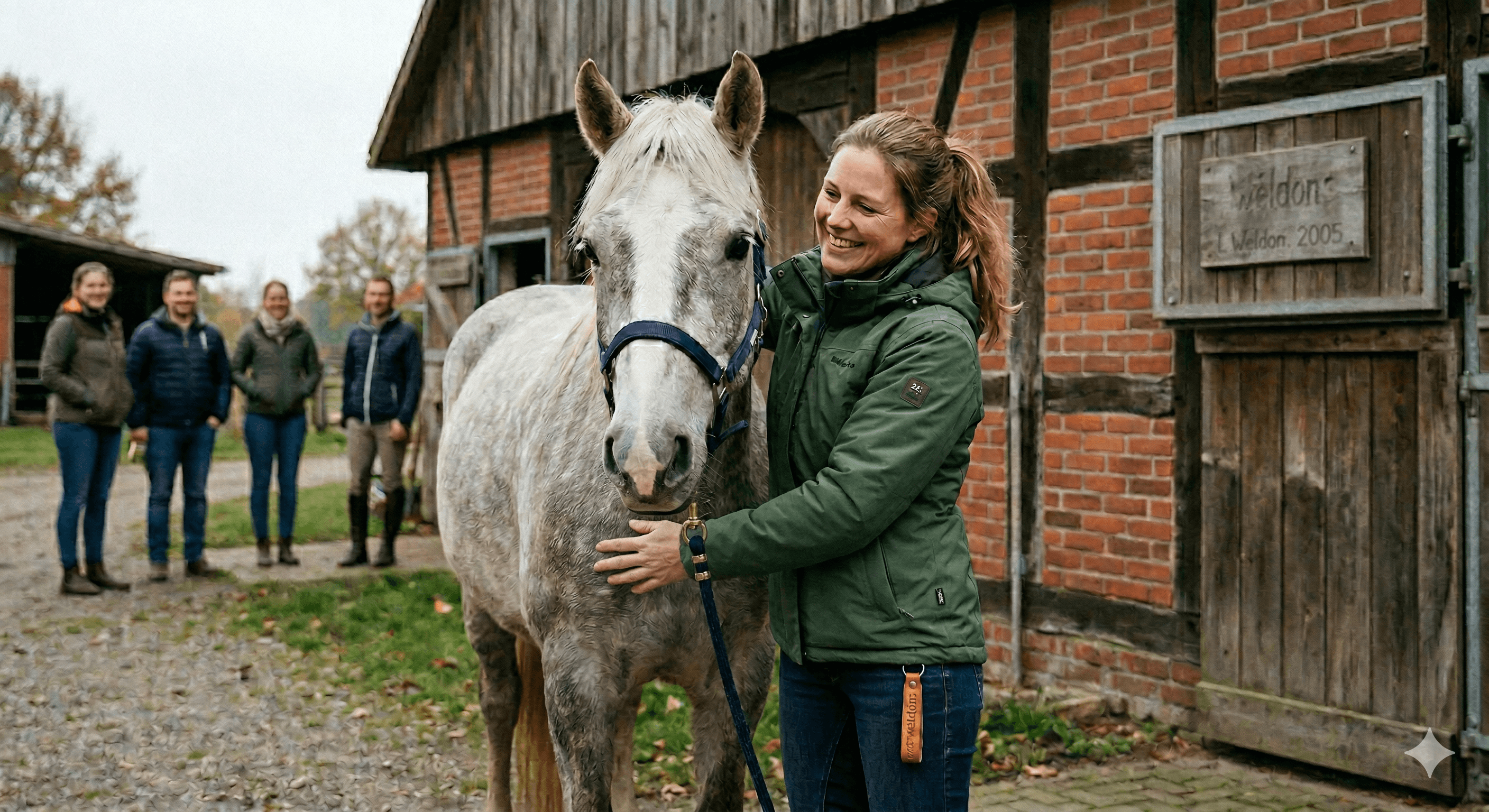
Have you been dreaming about having your own horse for a long time, but don’t know where to start? Keeping a horse as a beginner comes with a lot of questions — from costs and stable selection to daily care. Don’t worry, every horse owner started small at some point.
The right preparation before buying a horse
Before you buy a horse, you should honestly assess your situation. Time is the most important factor: plan for at least two hours a day for your horse, seven days a week. Even in winter, in the rain, and on days when you don’t feel like it.
The costs are higher than most beginners expect. Budget at least 400-600 euros per month for:
Stable rent (200-400 euros depending on region and type of keeping)
Feed and supplements (50-80 euros)
Hoof care every 6-8 weeks (40-80 euros)
Veterinary costs (budget 100 euros per month for preventive care)
Insurance (30-50 euros)
On top of that, there are one-time costs for equipment such as a saddle, bridle, grooming kit, and stable supplies — roughly 2,000-3,000 euros for a solid basic setup.
Which type of horse keeping suits you as a beginner
As a beginner, a well-run boarding stable is usually the best choice. You’ll get support from experienced horse owners, and the stable manager takes care of the basics.
Full board is ideal for getting started: the stable handles feeding, mucking out, and often turnout as well. You can focus on riding and building a bond with your horse.
Self-care stables are cheaper, but they take more time. You have to feed, muck out, and go to the stable in all weather, every day. It’s doable, but it requires a good routine.
Open stables with paddocks or pasture turnout are more horse-friendly than box-only keeping. Make sure the herd dynamics are right and that your horse finds its place.
Finding the right first horse
Take your time when looking for a horse. An experienced, calm horse between 8 and 15 years old is often the best choice for beginners. Young horses or difficult personalities can overwhelm a newcomer quickly.
Your first horse should have these qualities:
Balanced and people-oriented
Well mannered when being led and groomed
Healthy and regularly seen by a veterinarian
Accustomed to different situations
Take an experienced riding instructor or trainer with you when you view a horse. They can assess the horse more accurately and spot problems you might miss as a beginner.
By the way, Milo from ManeMap analyzes your horse’s profile together with the local weather and gives you concrete tips for the day in the Morning Briefing — perfect if you’re still unsure what your new horse needs right now.
The first few weeks as a horse owner
Settling in takes time. Your horse has to get used to the new stable, the other horses, and you as the owner. Plan plenty of time in the first few weeks just to be there and build a routine.
Start slowly: grooming, leading, short walks. Only once you know each other should you ease back into training. Many problems happen because beginners try to do too much too soon.
Keep a horse diary: note feed, behavior, anything unusual, and appointments. This helps you spot patterns and gives your vet important information.
Daily routine and important checks
Establish a fixed routine. Horses like consistency, and you won’t forget anything important. A typical daily routine looks like this:
Morning: Quick check when bringing the horse out — is it standing normally, eating, any injuries? Check hay and water.
Midday or afternoon: More thorough check during grooming. Feel the legs, look at the eyes and nostrils, check the temperature of the ears. Pick out and inspect the hooves.
Evening: Another quick check, especially if the horse comes into a stall overnight. Make sure feed and fresh water are ready.
Learn your horse’s normal baseline: What does the skin feel like, what do the mucous membranes look like, how does it usually behave? That’s the only way you’ll notice quickly when something isn’t right.
When to call the vet
As a beginner, you’ll often wonder: is this normal, or something to worry about? These symptoms always warrant a call to the vet:
Signs of colic: restlessness, pawing, looking at the flank
Lameness that doesn’t improve after a short walk
Fever above 38.5°C
Loss of appetite for more than 6 hours
Lethargy or unusual restlessness
Swelling or warm areas on the legs
It’s better to call once too often than to react too late. Reputable veterinarians will also give advice over the phone and tell you whether it’s urgent.
Your path to becoming a confident horse owner
Keeping a horse as a beginner is above all about learning, being patient, and trusting your instincts. Find support from experienced horse owners, a good veterinarian, and a trainer who will guide you long term.
Everyone makes mistakes at the beginning — that’s normal and nothing to panic about. What matters is that you stay attentive and are willing to learn. Your horse will forgive you, and over time the two of you will become a well-coordinated team.
Stop Guessing! Try ManeMap Pro free for 30 days. Milo analyzes your horse’s weather, training, and health data and gives you concrete daily recommendations — perfect for getting started as a horse owner.