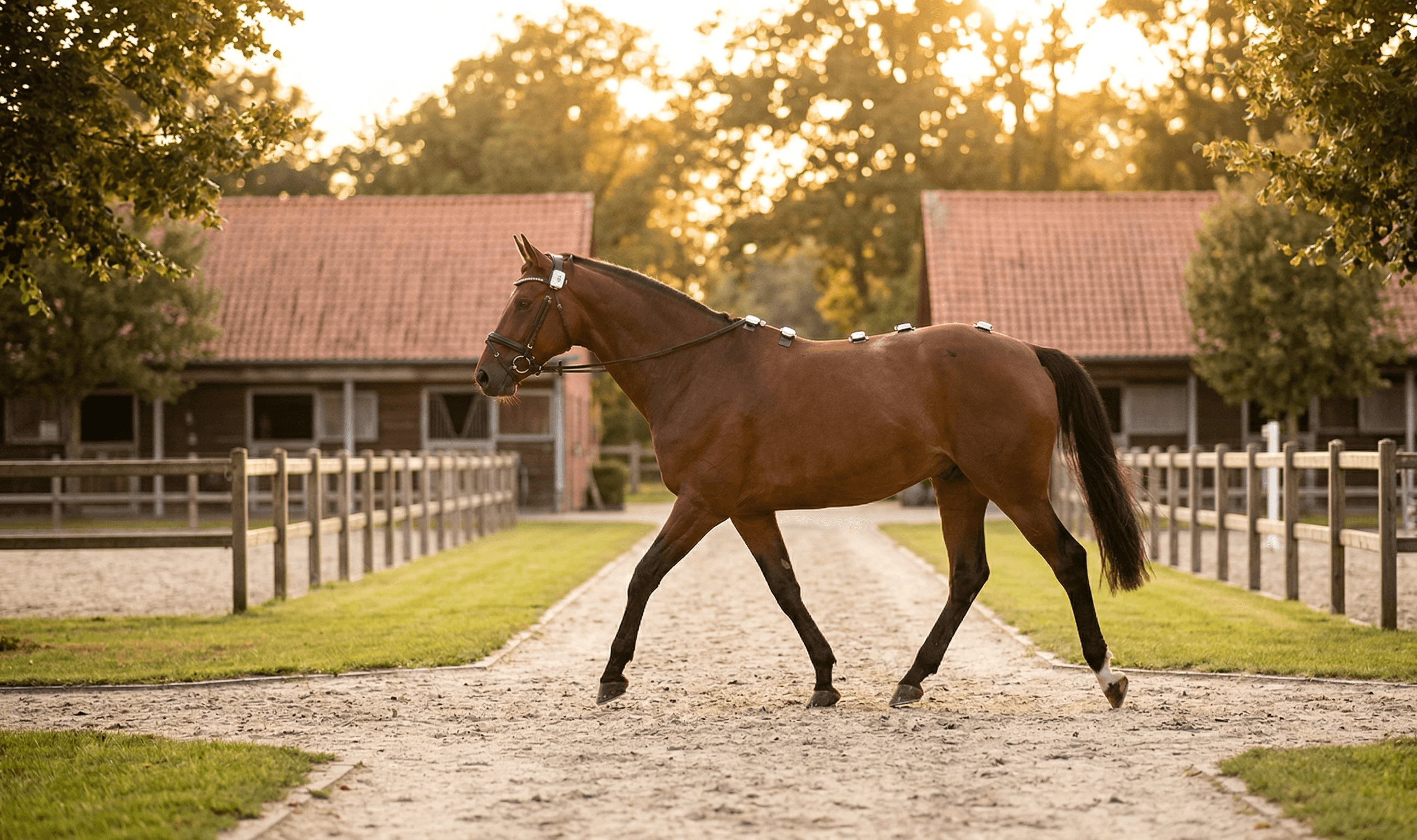
Your horse is moving differently than usual, but you can’t quite say why? AI gait analysis in horses makes visible what the human eye often misses. Modern sensor technology detects tiny changes in movement and helps you spot lameness before it becomes obvious.
How AI gait analysis works in horses
Sensors attached to the horse’s body measure tiny accelerations and rotations during movement. The data is transmitted via Bluetooth to an app, where artificial intelligence evaluates it. The system keeps learning continuously: the more horses it analyzes, the more precise the results become.
The most common measurement points are the forehead, croup, and fetlocks. Each sensor captures up to 1,000 data points per second. The AI compares these values with databases of healthy gait patterns and raises an alert when it detects deviations.
Lameness Locator was one of the first systems on the market. By now, there are also more affordable alternatives such as EquiMoves or StrideSAFE. Most work with one sensor on the forehead and one on the pelvis.
What AI gait analysis can detect
The system detects levels of lameness that are still below the threshold of human perception. Even experienced veterinarians often only reliably identify lameness from grade 2 out of 5. AI can already do that at grade 1.
Asymmetries in gait: Differences between the left and right side of the body
Head movement: Compensation in front limb lameness
Pelvic tilt: Signs of hind-end problems
Rhythm disturbances: Irregularities in the beat pattern
Reduced weight-bearing: Decreased loading of individual limbs
Objective measurement is especially valuable. While people’s perceptions fluctuate from day to day, AI provides consistent data. That also helps with progress monitoring during rehabilitation phases.
Limits of AI gait analysis
The technology has its weaknesses. Sensors only measure during recording - usually just a few minutes of trot in hand or on the lunge. What happens afterward under saddle is not captured by the system.
Some causes of lameness only show up under load or in specific turns. AI gait analysis can miss a restriction in the poll/upper neck if the horse looks normal when trotting straight ahead.
Environmental factors influence the measurement: gusts of wind, uneven ground, or distractions from other horses can create false spikes. Most systems need at least 35 meters of straight travel on level, firm footing.
Mental factors also play a role. An excited or tired horse moves differently from a relaxed one. The AI cannot distinguish these emotional states from physical problems.
Practical use and costs
Most systems cost between 3,000 and 15,000 euros. For private owners, there are rental options, or veterinary practices offer measurements as a service.
The process is usually standardized: attach the sensors, let the horse trot for 3-5 minutes, transfer the data, and analyze it. The results show charts with asymmetry values and recommendations for next steps.
Some veterinarians use the data for more targeted examinations. Instead of palpating the whole horse, they focus on the areas the AI has flagged as suspicious.
Milo from ManeMap could link such gait analysis data with training plans, weather conditions, and medical history in the future. If your horse tends to move asymmetrically more often after rainy days, the system recognizes patterns and warns you in time.
Alternative methods for detecting lameness
Besides AI gait analysis, there are other ways to spot movement problems. The classic veterinary lameness exam remains the gold standard, especially for acute issues.
Video analysis: Apps analyze smartphone videos of the trotting horse
Pressure mats: Measure force distribution during footfall
Thermography: Thermal imaging cameras show areas of inflammation
Motion scanners: 3D cameras capture joint angles without sensors
Each method has its place. AI gait analysis is well suited for regular checks and objective progress tracking. For acute lameness or complex problems, a veterinary examination remains irreplaceable.
When to see the vet
AI gait analysis never replaces the veterinarian; it complements the diagnosis. If you notice these warning signs, you should seek professional help immediately:
Visible lameness or a guarded posture
Swelling, heat, or pain on palpation
Sudden reluctance to move or stiffness
Consistently worsening measurements despite rest
Asymmetry values above the system’s thresholds
Stop Guessing! Try ManeMap Pro free for 30 days. Milo analyzes weather, training, and health data so you can spot changes in your horse’s behavior early and know when gait analysis makes sense.