Shedding season takes a massive toll on your horse’s energy. Twice a year, their body has to replace their entire coat from scratch. It’s hard work for their system—and there’s plenty you can do to support them through it.
When Does the Coat Change Happen?
Your horse doesn’t shed according to the calendar, but by daylight. The photoperiod triggers the process through hormonal shifts. In the fall, as the days grow shorter, the thick winter coat starts coming in. The transition to the summer coat kicks off as early as January, even if temperatures outside are still well below freezing.
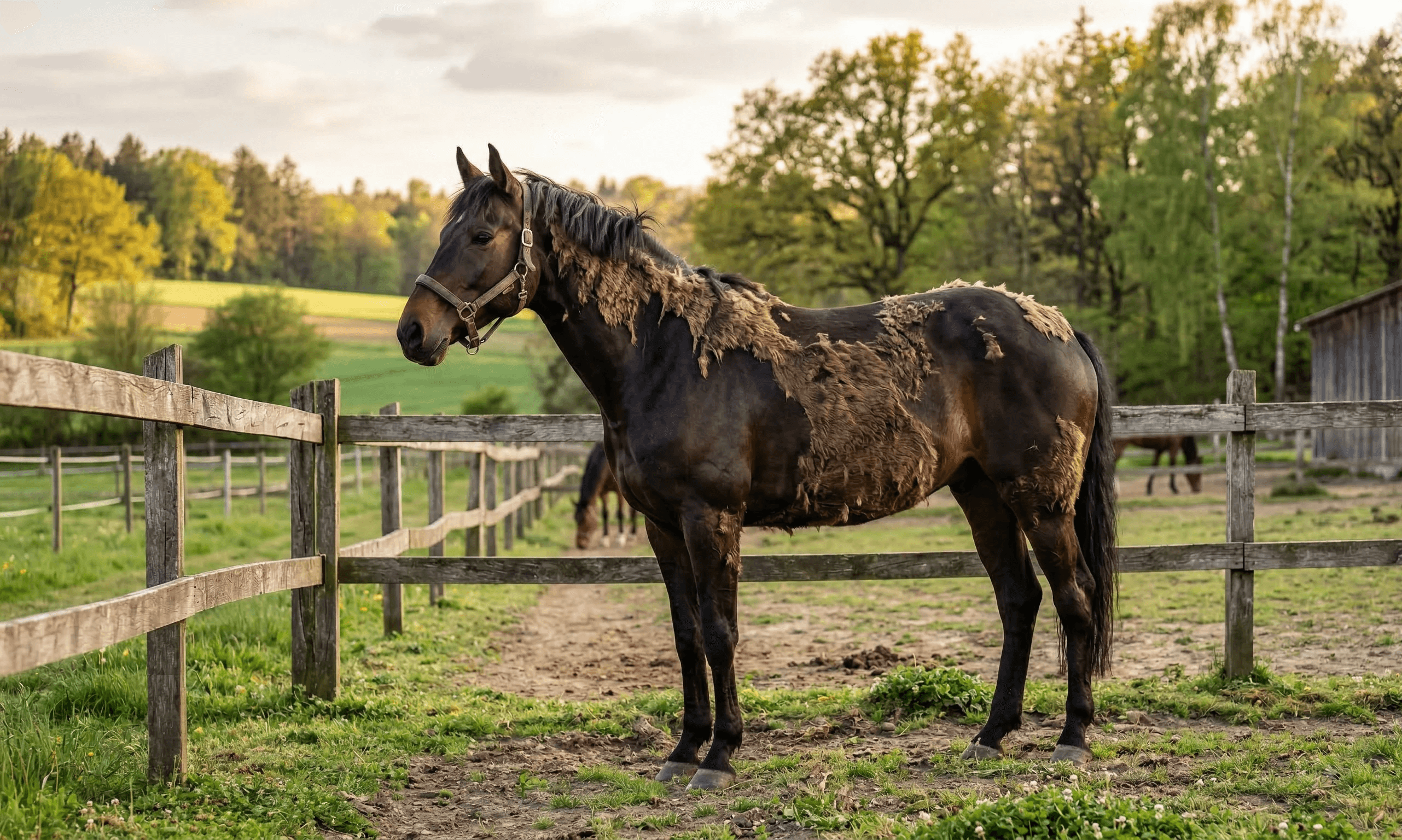
The spring shed usually takes longer and is far more demanding. Your horse has to shed that heavy winter wool while simultaneously growing fine new summer hair. This can easily take 6 to 8 weeks.
Seniors and horses with metabolic issues often need more time, with their coat change sometimes dragging on well into May.
Why Is Shedding So Exhausting for Horses?
During shedding season, your horse's system is working overtime. Their metabolism runs in high gear, and energy requirements can spike by 10–15%. At the same time, their body has to channel massive amounts of protein, vitamins, and minerals into coat production.
During this time, many horses are:
More lethargic and lacking their usual sparkle under saddle
Sensitive to grooming and brushing
More prone to infections and immune dips
Restless or a bit grumpy
This is completely normal. Your horse is simply pouring their energy into shedding rather than training.
Proper Grooming During Shedding Season
Good grooming is everything right now. But don't just scrub away aggressively—that can be painful and put unnecessary stress on your horse.
Here’s how to do it right:
Start with a soft brush or a gentle rubber curry comb
Work in circular motions to gently loosen dead hair
Follow up with a body brush to sweep the loose hair away
Be especially gentle on sensitive areas like the belly and legs
A metal shedding blade can be helpful, but stick to hardy, less sensitive horses. Always test carefully to make sure your horse is comfortable with it.
By the way, Milo's Morning Briefing in the ManeMap app takes shedding season into account, too. It pairs local weather data with your horse’s profile to suggest when it’s a good day for a deep grooming session—and when you’re better off keeping things low-key.
Adjusting Feed for the Coat Change
Your horse now needs extra energy and targeted nutrients. High-quality protein is crucial, as hair consists of roughly 95% protein.
Key nutrients that support shedding:
Zinc: Promotes healthy hair growth
Copper: Essential for coat pigmentation
Biotin and B-Vitamins: Strengthen hair structure
Omega-3 Fatty Acids: For a healthy, gleaming shine
Flaxseed, brewer's yeast, or specialized coat-change supplements can provide great support (always check with your vet first). Make sure your horse is drinking plenty of water, too—dehydrated, dry skin makes shedding much harder.
Training During Shedding Season
Less is more. Your horse has less energy in the tank and will sweat much faster under that dense winter coat. Dial back the intensity and make sure to include longer warm-ups and cool-downs.
Crucial step: Cool your horse out thoroughly after riding and use a fleece cooler. Otherwise, you risk chills, coughs, or tight muscles.
When to Be Concerned
Normally, horses finish shedding by late May. Call your vet if:
The shed drags on well into summer
The new coat comes in dull, coarse, or patchy
Bald spots, flaky patches, or skin irritations develop
Your horse drops noticeable weight
They remain persistently lethargic and off their feed
In older horses, a delayed or incomplete shed can be an early sign of PPID (Equine Cushing's Disease). It’s always best to have your vet run tests.
With ManeMap, you can log your observations throughout shedding season and keep all your appointments in view. Milo is right there with you, offering smart tips for your day-to-day barn routine.