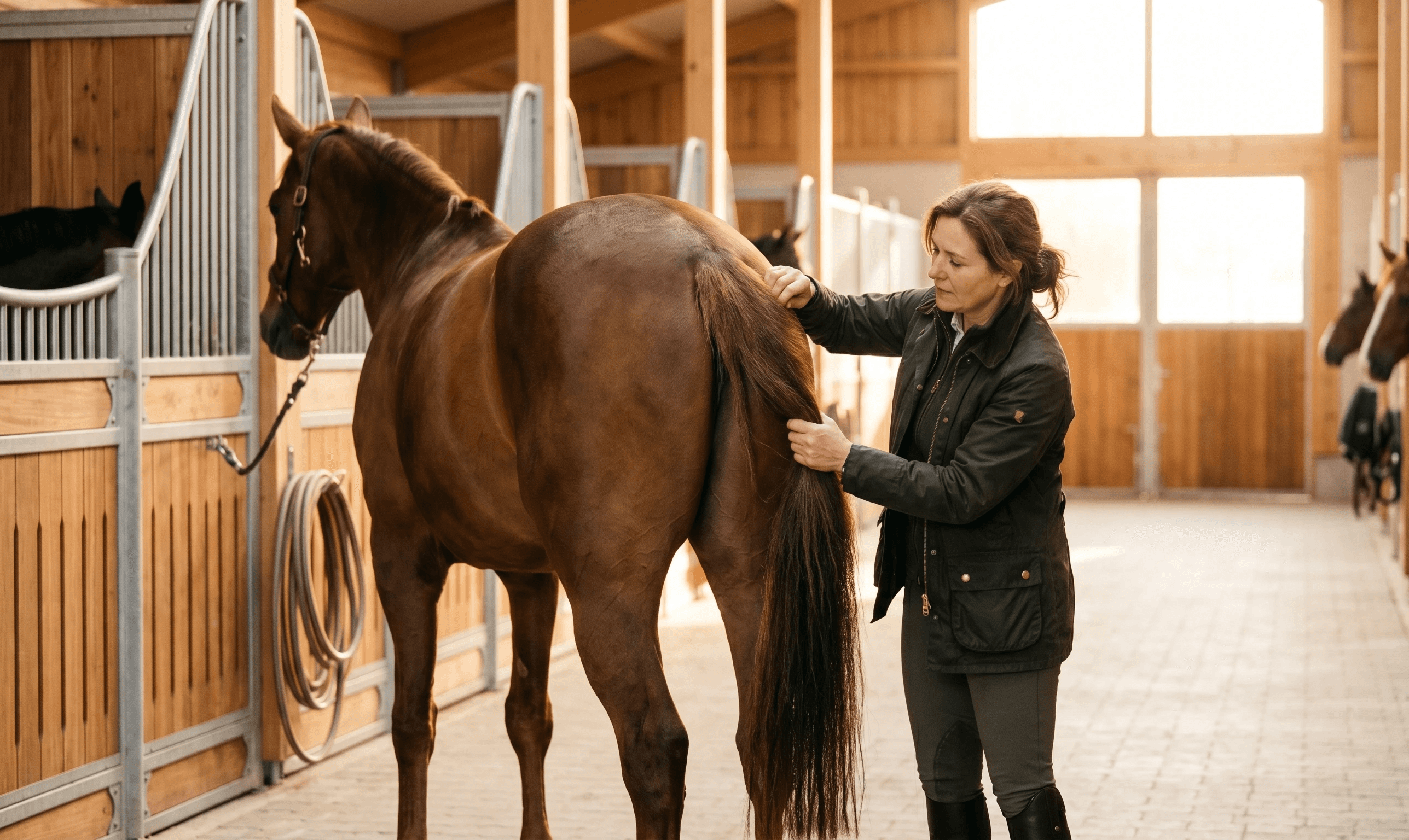
Have you suddenly noticed brown water staining your horse's tail and wondered what is going on? Fecal water syndrome in horses can have various causes—ranging from completely harmless to requiring veterinary attention.
What is fecal water syndrome?
Free fecal water (FFW) is a brownish liquid that runs out of the horse independently of normal bowel movements. Many horse owners confuse it with diarrhea, but they are not the same. With fecal water syndrome, the horse still passes normally formed manure balls, but this liquid runs out alongside or after them.
The problem often occurs in flare-ups. You might have a quiet week, followed by daily issues again. What makes it particularly unpleasant is that the liquid often drains uncontrollably, making a mess of the horse's hind legs and tail.
The 7 most common causes of fecal water syndrome
1. Incorrect diet or sudden feed changes
Too much concentrate, poor-quality hay, or changing feed too quickly puts a massive strain on the hindgut. In particular, feeds high in sugar, such as large amounts of apples or carrots, or sweet treats, can trigger fecal water.
Moldy hay is another common trigger. Always check your hay for a musty smell and gray patches.
2. Stress and excitement
Shows, moving to a new barn, or introducing new herd members—anything that stresses your horse can disrupt their digestion. The gut often reacts much more sensitively than we think.
3. Dental issues
Sharp enamel points, loose teeth, or pain while chewing prevent horses from grinding their forage properly. This poorly chewed feed then ferments in the gut and can cause fecal water.
4. Parasites
A heavy worm burden, especially small strongyles, irritates the intestinal wall. This leads to inflammation and fecal water.
5. Medication
Antibiotics destroy not only harmful bacteria but also beneficial gut microbes. After treatment, the gut flora is often disrupted for weeks.
6. Risk of sand colic
Horses grazing on sandy pastures or eating hay directly off the ground often ingest sand. This accumulates in the large intestine and can trigger fecal water as well as colic.
7. Liver issues
The liver produces bile acids, which are crucial for fat digestion. If liver function is compromised, fecal water can develop.
When should you call the vet?
Fecal water syndrome is not always harmless. Call your veterinarian if:
The fecal water persists for more than a week
Your horse also seems lethargic or has lost its appetite
A fever develops
The mucous membranes are pale or yellowish
Your horse shows signs of colic
Weight loss occurs
First aid for fecal water
There are a few things you can do before the vet arrives:
Check the diet: Cut out concentrates and sweet treats immediately. Feed only top-quality hay and ensure any feed changes are made gradually over at least 14 days.
Keep things calm: Minimize stress. Skip upcoming shows and ensure a quiet, stable environment.
The ManeMap app helps you spot patterns. Milo combines your feeding notes with weather data and stress factors to figure out exactly what is triggering fecal water in your horse.
Hygiene: Keep the soiled areas clean and dry to prevent skin scald and irritation from developing.
Prevention is the best approach
Regular dental check-ups, a well-managed diet, and stress reduction are key to preventing fecal water. Running a fecal egg count every six months will show whether deworming is necessary.
Focus on high-quality forage: Good hay smells fresh and is dust-free. Concentrates should not exceed actual energy requirements—many leisure horses do not need them at all.
Stop guessing! Try ManeMap Pro free for 30 days. Milo analyzes feed, stress, and environmental factors so you can pinpoint what is causing your horse trouble before it becomes a major issue.